A kitchen island rarely feels complete when the ceiling above it is left unconsidered. This is where the choice of a linear pendant versus island chandelier becomes more than a practical lighting decision. The fixture establishes the island’s visual importance, frames everyday rituals from breakfast to entertaining, and can bring a tailored layer of luxury to an otherwise functional room.
Both options can look exquisite. The better choice depends on the island’s length, the ceiling height, the surrounding finishes and, just as importantly, how dramatic you want the room to feel after dark.
Linear pendant versus island chandelier: the visual difference
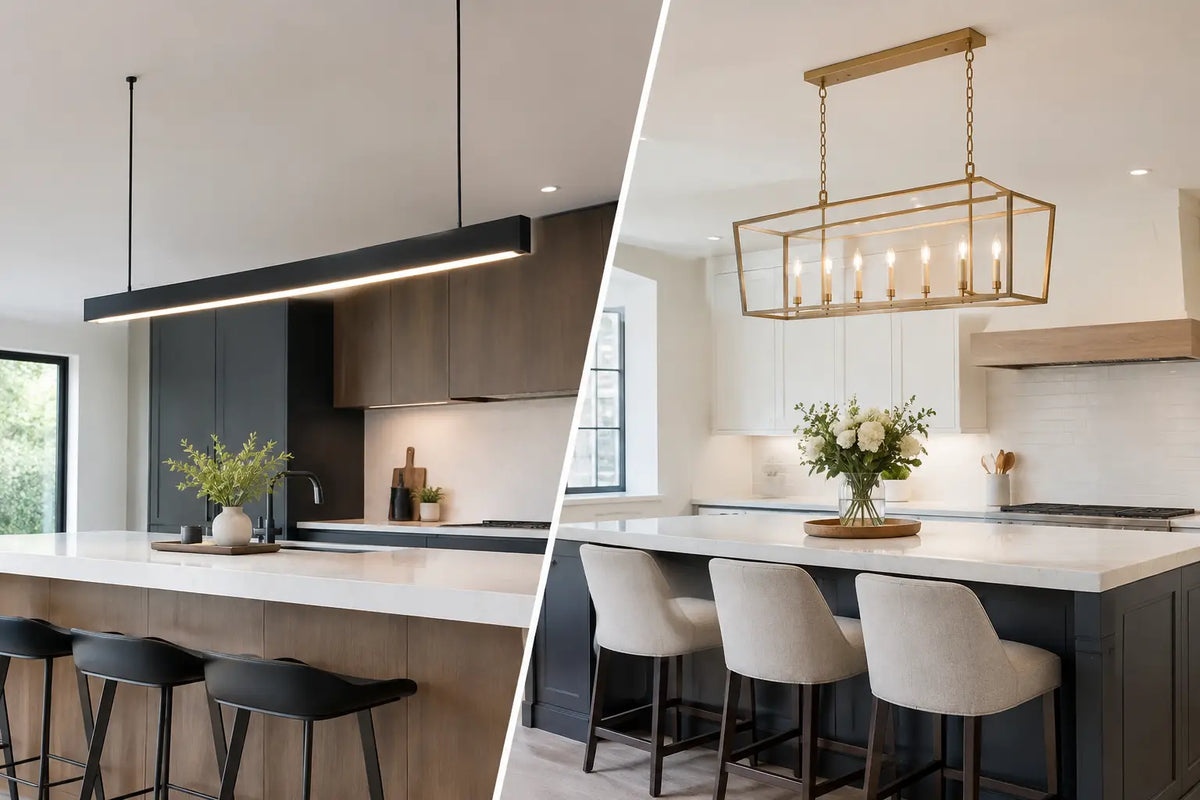
A linear pendant is defined by its horizontal form. It may be a slim bar of integrated LEDs, a row of glass globes, or an elongated metal and alabaster design suspended on cables or rods. Its silhouette follows the length of the island, making it a naturally composed choice for long, clean-lined kitchens.
An island chandelier is more decorative in spirit. It can still be long and rectangular, but it usually introduces more depth, texture and sculptural presence. Think tiered crystal, clustered globes, candle-style arms, cascading glass, or a substantial frame in warm brass, bronze or black. It is designed to be noticed as a feature rather than simply read as task lighting.
Put simply, a linear pendant draws the eye along the island. An island chandelier draws the eye upwards and gives the entire kitchen a sense of occasion. Neither approach is automatically more luxurious. A beautifully detailed linear pendant can feel quietly opulent, while a pared-back island chandelier can look strikingly modern. The distinction lies in the level of ornament and visual weight.
Choose a linear pendant for refined architectural clarity
A linear pendant is often the most harmonious choice in a contemporary kitchen with handleless cabinetry, waterfall worktops and streamlined appliances. Its direct shape reinforces the architecture of the room without competing with statement stone, richly veined marble or a boldly coloured island.
This style also works particularly well where the island is long but narrow. A broad, multi-tiered fixture can feel crowded above a slender worktop, whereas a linear design keeps the composition elegant and intentional. For open-plan spaces, it can provide definition without creating a visual barrier between the kitchen and living area.
Light distribution is another advantage. Many linear pendants cast an even wash of illumination across the worktop, which is useful for food preparation, serving and relaxed family meals. Fixtures with frosted glass or diffusers soften glare, while exposed globes deliver more sparkle and personality.
A linear pendant is not only for minimalist interiors. In a transitional kitchen, look for fluted glass, aged brass details, milk-glass shades or a sculptural alabaster bar. These finishes retain the neat horizontal profile while introducing the warmth and material richness associated with luxury interiors.
When one long fixture is enough
One centred linear pendant is usually best when the island is the room’s strongest horizontal element and the ceiling is not exceptionally high. It gives a calm, gallery-like finish, especially if the fixture is roughly half to two-thirds the island’s length.
For an island measuring 2.4 metres, a fitting between about 1.2 and 1.6 metres often feels balanced. This is a guide rather than a rule. If the pendant has a fine, open form, it may tolerate greater length; if it is deep, dark or visually dense, choosing a shorter piece can preserve breathing room.
Choose an island chandelier for a stronger focal point
An island chandelier earns its place when the kitchen needs glamour, texture or a clear decorative centrepiece. It is especially compelling in kitchens that open onto a dining or living space, where a simple task fixture may feel too restrained against generous proportions and elevated furnishings.
Crystal island chandeliers bring movement and reflected light to polished surfaces, while smoked glass and dark metal designs suit more moody, contemporary schemes. A brass chandelier with softly glowing opal globes can bridge traditional cabinetry and modern seating with timeless elegance. In each case, the fixture makes the island feel less like a work surface and more like a destination.
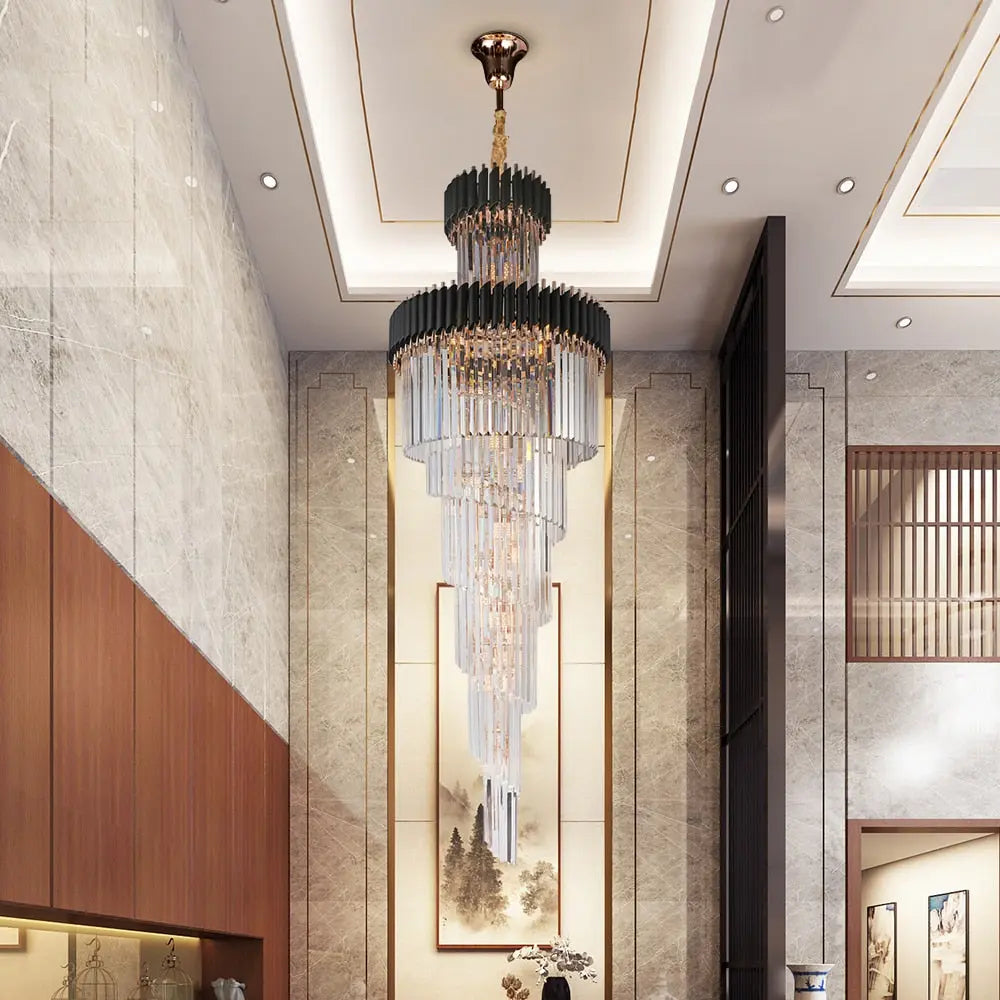
This category is also valuable in rooms with high ceilings. A chandelier has the volume to occupy vertical space gracefully, preventing the ceiling plane from feeling remote. In a kitchen with a vaulted ceiling, double-height glazing or an adjoining foyer, a layered or cascading design can create a considered connection between the different areas.
The trade-off is presence. A chandelier with multiple arms, shades or hanging elements can visually fill the space quickly. If your cabinetry already features ornate moulding, patterned tiles and heavily veined stone, choose a more edited chandelier silhouette. Let one element lead rather than asking every surface to make a statement at once.
A chandelier can still be practical
Decorative does not have to mean dim. Look for an island chandelier that accepts multiple bulbs, works with a dimmer and directs some light downwards. Layered kitchen lighting remains essential: the island fixture should be supported by recessed ceiling lights, under-cabinet lighting and, where appropriate, wall lights.
Dimmers are particularly worthwhile. Bright illumination is useful for chopping and clearing up, but a lower setting allows the chandelier to create a warm, flattering atmosphere for drinks, supper and late conversation.
Get the proportions right before choosing a style
Scale decides whether even the most beautiful fitting looks bespoke or misplaced. Begin with the island, not with the fixture alone. Measure its length and width, then consider the clearance around it, nearby tall cabinetry and the visual weight of bar stools.
As a starting point, leave approximately 15 to 30 centimetres of clear space between each end of the fixture and the island’s ends. This prevents a long pendant or chandelier from looking as though it is spilling beyond the furniture below. For two or three individual pendants, treat the group as one composition and keep the outer fittings within those boundaries.
Hanging height matters just as much. Over a kitchen island, the lowest point of most fixtures should sit roughly 75 to 90 centimetres above the worktop. Raise it a little if household members are tall, if sightlines across the room are important, or if the chandelier has a generous shade or low-hanging crystal details. Lower it carefully if the room has lofty ceilings and the fixture needs more visual connection to the island.
Before installation, tape out the fixture’s footprint on the ceiling or hold a paper template in position. It is a modest step that can save a costly proportion mistake, particularly when selecting a wide chandelier online.
Match the fixture to your kitchen’s design language
The most successful lighting does not copy every finish in the room. It creates a relationship with them. In a kitchen with brushed brass taps, a brass or champagne-gold fitting may feel naturally resolved, but a bronze chandelier can add pleasing depth instead of looking overly matched.
For pale oak, cream cabinetry and natural stone, alabaster, linen-toned shades and softly aged metals create a quietly luxurious palette. Black or graphite linear pendants offer welcome contrast in airy modern kitchens, particularly when repeated in window frames, cabinet hardware or dining furniture.
Glass deserves careful thought. Clear glass is crisp and luminous, but it reveals the bulbs and needs regular cleaning in a busy cooking space. Ribbed, smoked or opal glass is more forgiving and can produce a softer, more atmospheric glow. Crystal offers exceptional brilliance, though it is best reserved for a design scheme with enough space and restraint to let it shine.
The practical questions worth asking
A beautiful fixture should work as well on a Tuesday morning as it does when guests arrive. Consider how close the island sits to the hob, whether steam and grease may reach the fitting, and how simple it will be to clean. Open shades and intricate crystal require more care than a sealed linear LED design.
Also check the bulb type, colour temperature and dimming compatibility before ordering. Warm white light around 2700K is generally the most flattering choice for residential kitchens, especially with timber, brass and stone. If the kitchen is used heavily for preparation, add discreet task lighting rather than relying on a cooler, harsher island fixture.
For homeowners seeking a statement piece without sacrificing confidence in the details, ChandeliersLife offers design-led lighting that can bring polish, personality and dependable illumination to the heart of the home.
The right choice should make you pause when you walk into the room, yet never make the island harder to use. Choose the linear pendant when the kitchen calls for disciplined elegance; choose the island chandelier when the space is asking for its defining moment.