A beautiful room can still feel unfinished when one shadowed corner seems to disappear at the edge of the layout. Whether it is beside a favourite armchair, at the far end of a hallway or beneath a staircase, knowing how to brighten dark corners changes the atmosphere of the entire space. The aim is not to flood every inch with harsh light. It is to introduce a considered glow that gives the room more depth, warmth and intention.
Start with the reason the corner feels dark
Before choosing a new fixture, look at what is creating the shadow. A corner may be naturally deprived of daylight, blocked by a tall cabinet, finished in a deep wall colour or simply outside the reach of the room's central ceiling light. Each cause calls for a slightly different solution.
A dark corner in a pale, open-plan living room often needs a focused pool of light rather than a major fixture. In a moody dining room with rich paintwork, however, a sculptural wall light or softly glowing table lamp can make the darkness feel luxurious rather than accidental. The goal is to make the corner belong to the design scheme.
Also consider how the room is used after sunset. A reading corner needs practical illumination at chair height, while an empty stretch near a console table benefits more from decorative light that draws the eye. This distinction prevents a common mistake: buying a beautiful fixture that looks exceptional but does not light the area you hoped to improve.
How to brighten dark corners with layers
The most elegant interiors rarely rely on one overhead light. They use layers, allowing the eye to travel through a room instead of stopping at a bright centre and fading into shadow around the edges. For a dark corner, combine ambient light with a secondary source that is positioned closer to the problem area.
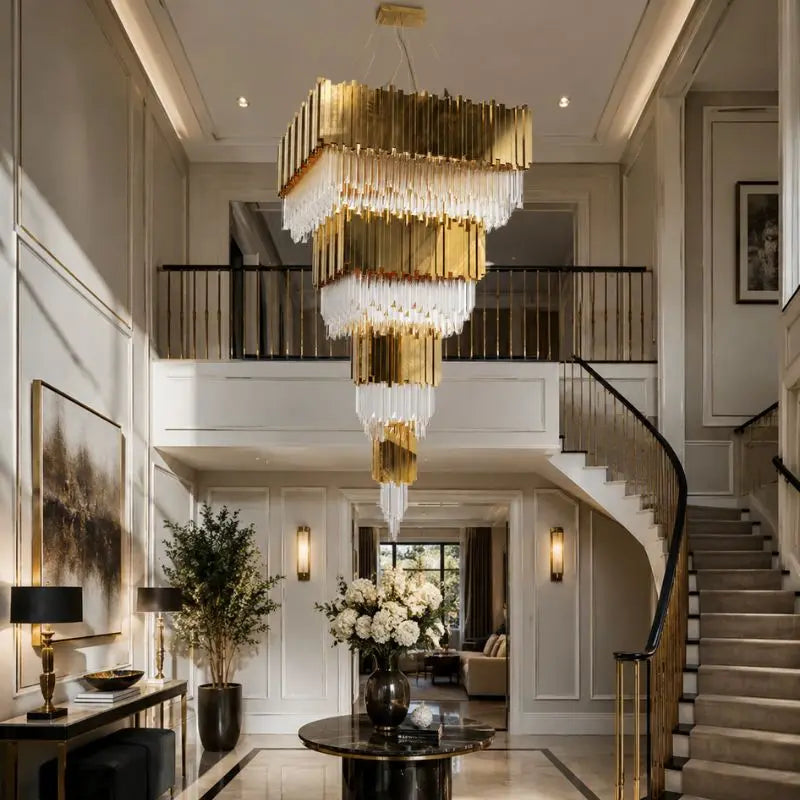
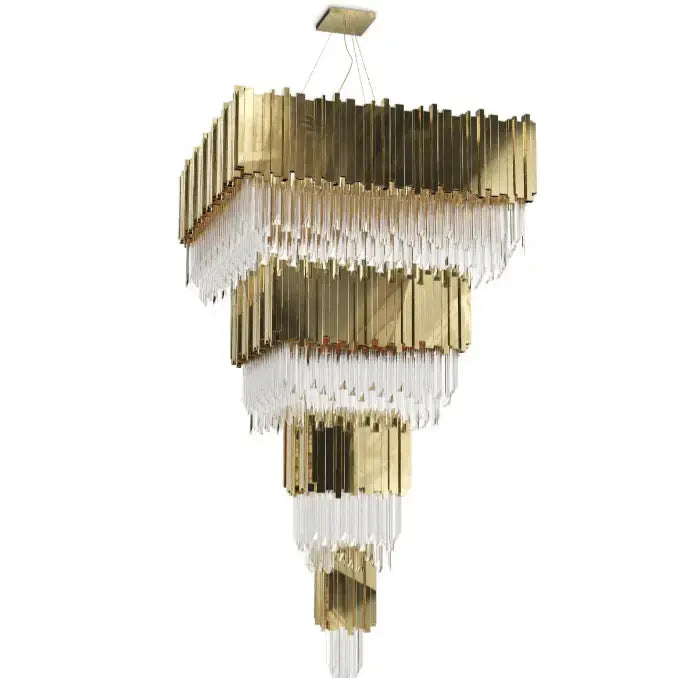
Ambient light establishes the room's overall mood. A chandelier, pendant or refined semi-flush ceiling fixture can provide this foundation, especially in a foyer, dining room or living space. Yet even a generous ceiling fitting will cast shadows behind furniture and into architectural recesses. That is where accent and task lighting earn their place.
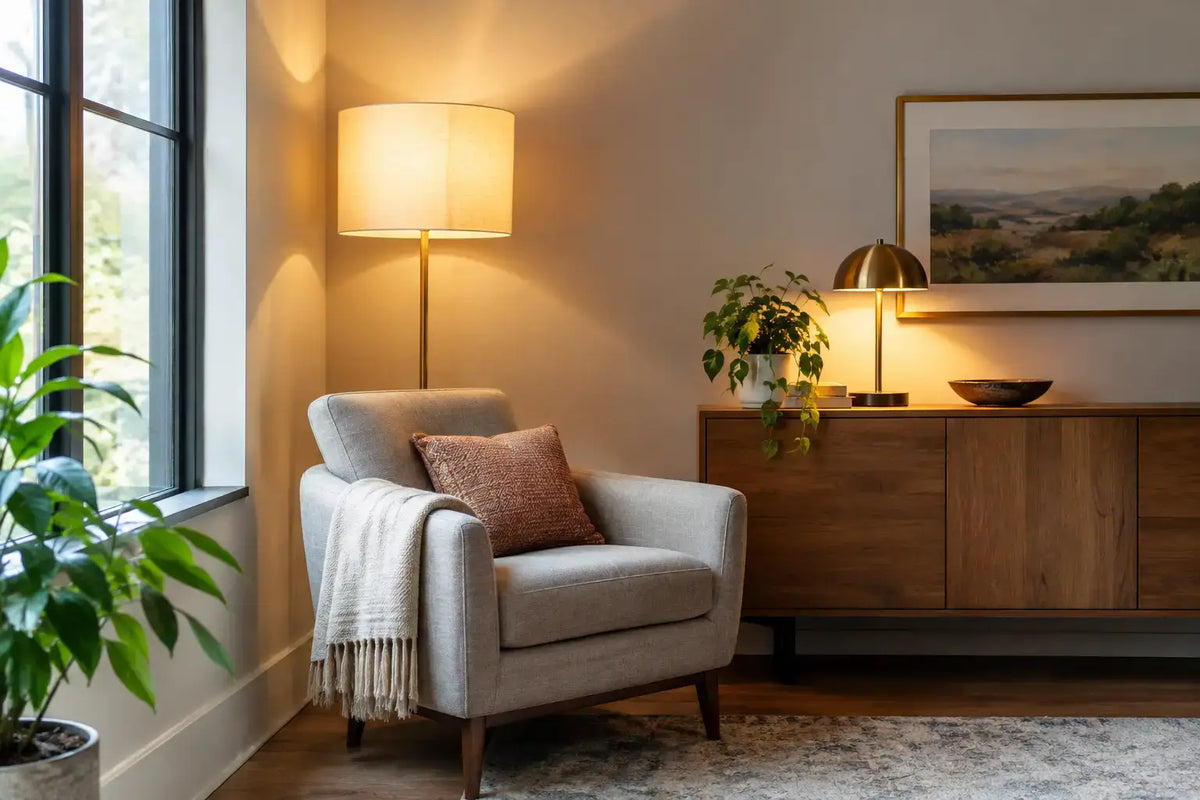
A floor lamp is often the quickest transformation. Place it just behind or beside an occasional chair, ensuring the shade sits high enough to throw light across the wall as well as downwards. An uplighter is particularly effective in a corner with a low ceiling, as it gently washes the surface above and makes the room appear taller. For a more tailored look, choose a floor lamp with a fabric, glass or alabaster-style shade that diffuses the bulb rather than exposing a hard point of light.
Table lamps bring a different kind of luxury. On a side table, console or compact pedestal, they create a low, inviting glow that makes a corner feel furnished and deliberate. Pairing one with a statement ceiling piece helps the room feel composed at every level, from the ceiling to the furnishings.
Choose the fixture for the corner, not just the room
Scale matters. A tall, narrow corner beside a fireplace or bookcase can accommodate an elegant floor lamp with visual presence. A small corner near a doorway may need a discreet wall light or compact table lamp instead. Oversizing the fitting can make a tight space feel crowded, while a fixture that is too small will disappear and leave the lighting problem unresolved.
Wall lights are especially useful when floor space is limited. Mounted on either side of a console, a framed artwork or an architectural niche, they create symmetry while sending light across the wall. In a corridor or stairwell, wall lights offer both safety and sophistication without interrupting the walkway. Choose shades or diffusers that conceal the bulb if you want the light to feel soft and polished.
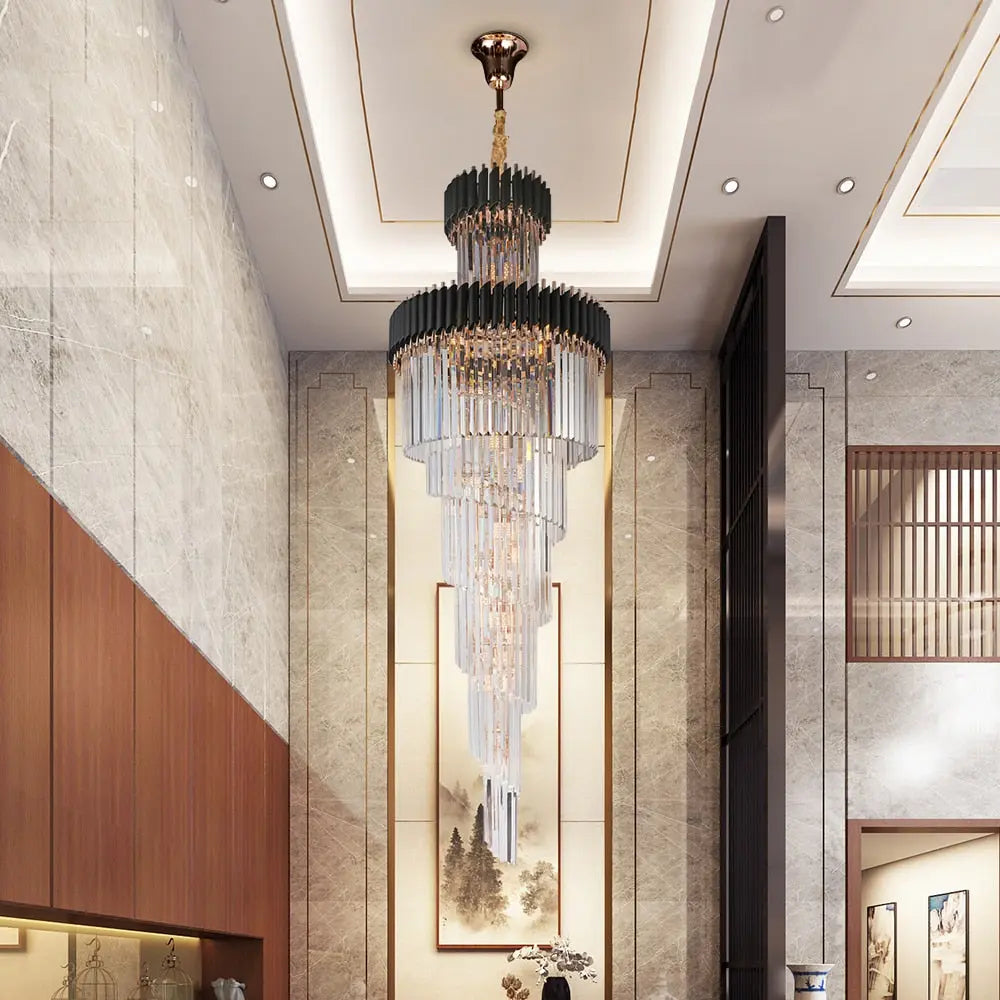
For corners that are visible from an entrance, decorative impact deserves greater consideration. A small crystal chandelier in a tall landing, an alabaster wall fitting in a quiet passage or a marble-inspired table lamp in a foyer can turn an overlooked area into a moment of arrival. Statement lighting is most successful when it has room to be noticed, rather than being squeezed between bulky furniture.
Let surfaces multiply the light
Lighting alone is only part of the answer. The materials around a dark corner determine whether light is absorbed, reflected or softened. A mirror opposite or adjacent to a lamp can amplify the glow and add welcome dimension, particularly in a narrow hall or compact dining area. Position it to reflect a pleasing view, such as a pendant, artwork or window, rather than a cluttered shelf.
Metallic details, glass-topped tables and glazed ceramics can also catch light beautifully. These do not need to be overtly glossy or glamorous. A brass lamp base, a smoked-glass vase or subtle antique mirror can introduce movement without making the scheme feel overly styled.
Wall colour has a noticeable effect too. Deep navy, charcoal and forest green can be exquisite choices, but they absorb illumination and benefit from warmer, layered lighting. If repainting is not on the agenda, use a light-toned piece of art, a textured linen shade or a pale accent chair to create contrast within the corner. The darker the backdrop, the more considered the light source should be.
Select the right bulb temperature and brightness
A fixture can be perfectly placed yet still feel wrong if the bulb is too cool, too dim or overly bright. For living rooms, bedrooms and dining spaces, warm white light generally creates the most flattering effect. It complements timber, velvet, stone and metallic finishes, while making decorative lighting feel inviting rather than clinical.
Brighter light is useful in practical zones such as a utility area, home office nook or stair corner, but it should still be diffused where possible. An exposed, high-output bulb can create glare on nearby walls and make the rest of the room seem dim by comparison. A shaded lamp, frosted globe or glass diffuser gives a gentler result.
Dimmable lighting is worth prioritising when the corner serves more than one purpose. A floor lamp beside a reading chair may need clear light in the evening, then a softer glow when entertaining. If the fixture and electrical setup support it, a dimmer gives you the flexibility to shift the atmosphere without changing the design.
Give each room its own solution
In a living room, a dark corner is often best treated as a destination. Add a floor lamp, a comfortable chair and a small table to form a reading retreat. In a dining room, a console lamp or pair of wall lights can extend the elegance of the chandelier beyond the table itself.
Bedrooms benefit from low-level lighting. If one side of the room feels heavy or empty, a bedside table lamp, wall-mounted reading light or slim floor lamp can balance the composition without disturbing a restful mood. Avoid overly cool bulbs here, as they can make textiles and skin tones appear flat.
For foyers and staircases, use light to guide movement. A decorative pendant or chandelier provides a memorable focal point, while wall lighting defines the perimeter and reduces pockets of shadow. Outdoors, the same principle applies: illuminate corners near seating, steps or garden walls with purpose, never with a glaring wash of light that spoils the evening ambience.
Avoid these quick fixes
Do not place a lamp in a corner simply because there is an empty socket nearby. Consider where its light will fall and whether people will see the bulb directly when seated. Equally, avoid relying on a single oversized ceiling fixture to solve every dark edge in the room. It may brighten the centre while leaving the perimeter unchanged.
Be cautious with matching every light source too precisely. A chandelier, wall lights and lamps should feel related through finish, shape or mood, but they do not need to be identical. A mix of crystal, warm metal and soft fabric shades can feel layered and collected when the proportions are right.
Finally, leave breathing room around a decorative fixture. A remarkable lamp loses impact when crowded by tall plants, stacked accessories and oversized furniture. One confident piece, thoughtfully placed, often brings more radiance than several smaller additions.
A dark corner is an opportunity to add character, not a flaw to hide. Choose a light that feels at home with the architecture and furnishings, then let its glow reveal the texture, colour and quiet beauty already waiting in that part of the room.