A front door can be beautifully painted, framed by immaculate planting and finished with elegant hardware, yet still feel underwhelming after sunset. The best lanterns for front doors do more than make a keyhole visible: they establish atmosphere, bring proportion to the façade and make every arrival feel considered.
For a Georgian townhouse, a traditional glazed lantern can lend instant gravitas. For a pared-back new build, a clean-lined black fitting gives the entrance a confident architectural edge. The right choice depends on the scale of your doorway, the protection offered by the porch and the character you want guests to notice first.
What makes a front-door lantern feel exceptional?
The most successful exterior lighting feels like part of the architecture rather than an afterthought. It should provide a welcoming pool of light around the threshold without glaring into visitors’ eyes or washing out the texture of brick, stone or timber.
Start with proportion. A single wall lantern beside a standard-width door usually looks balanced when it is around one-quarter to one-third of the door’s height. Larger entrances, double doors and grand porticos can carry taller fixtures or a symmetrical pair. A lantern that is too small disappears against a substantial façade; one that is oversized can crowd the door furniture and feel fussy.
Material and glazing deserve equal attention. Clear glass offers crisp illumination and puts the bulb on display, making it ideal for decorative filament lamps. Seeded, ribbed or frosted glass softens the glow and conceals the bulb more gently. Metalwork in black, aged brass, bronze or nickel should complement - not necessarily match exactly - your door handle, house numbers and letter plate.
The 7 best lanterns for front doors
1. Traditional coach lanterns for timeless façades
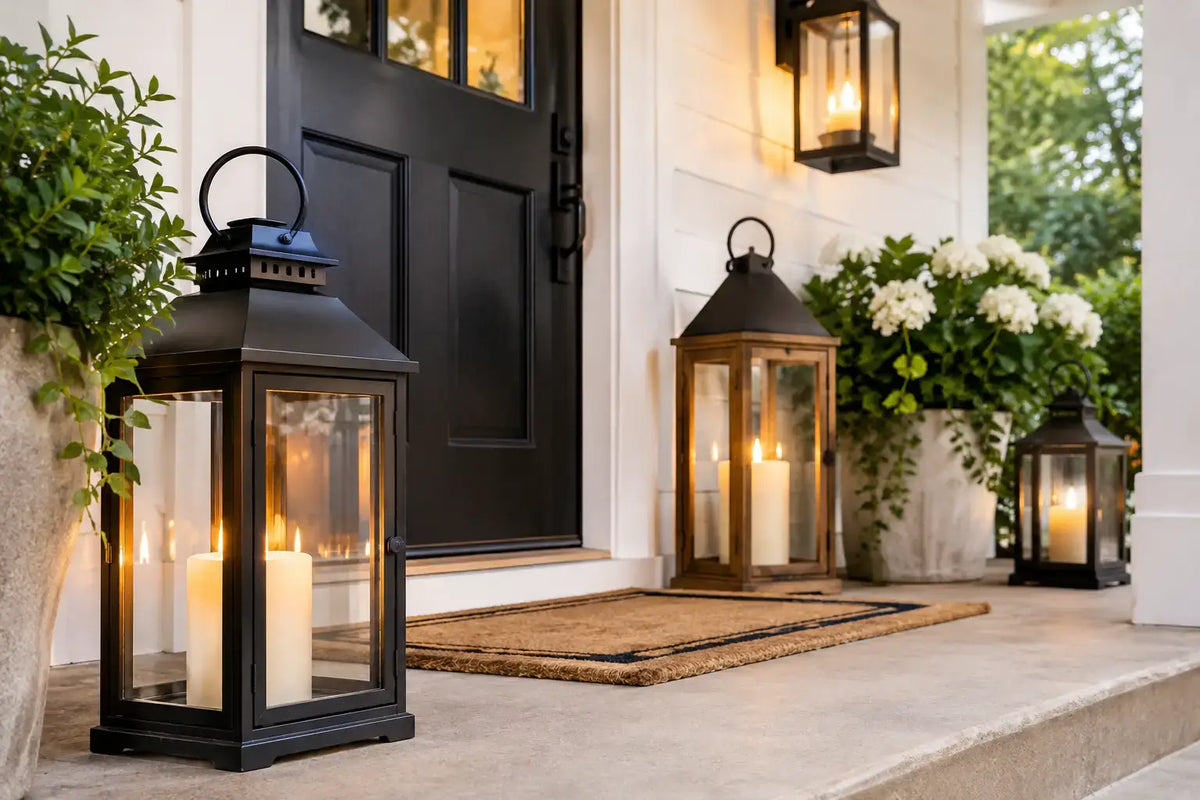
A classic coach lantern remains one of the best choices for period homes and anyone drawn to enduring elegance. Defined by a framed metal body and panels of glass, it sits beautifully beside panelled front doors, sash windows and brickwork. Black is particularly versatile, offering a crisp contrast against pale render and a grounded finish against red brick.
Choose a version with softly detailed finials or a curved arm for a more heritage-led appearance. Keep the silhouette restrained if your exterior already has ornate ironwork, a decorative fanlight or intricate masonry. This style has presence, but it should not compete with the house.
2. Oversized wall lanterns for statement entrances
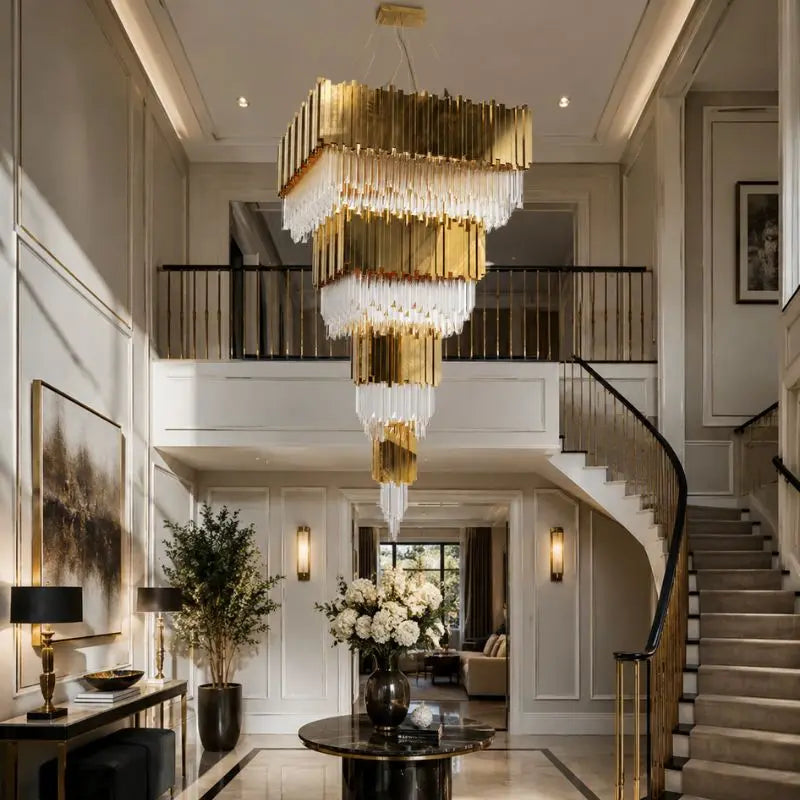
A large-scale wall lantern can give a broad doorway the same visual authority as a foyer chandelier gives an interior hall. These fittings are especially effective on detached homes with generous elevations, deep porches and tall doors. Their vertical profile draws the eye upward, making the entrance feel more composed and substantial.
The trade-off is that scale requires breathing room. Measure from the top of the lantern to any porch roof, archway or overhang before choosing a dramatic design. If a fixture is squeezed beneath a low canopy, it will lose its elegance and may cast awkward shadows.
3. Modern black lanterns for contemporary homes
For contemporary exteriors, matte black lanterns offer sharp definition without looking cold. Look for a rectangular or cylindrical form with minimal framing, especially when the house features black window frames, dark cladding or a charcoal roofline. The contrast is equally striking beside timber doors and pale stone.
A modern lantern often has more exposed glass than its traditional counterpart. This creates a lighter, airier appearance, but means bulb selection matters. A warm-white LED bulb, typically around 2700K, gives the entrance a welcoming glow. Avoid very cool white light, which can make stonework look stark and turn an inviting porch into something closer to a security-lit passageway.
4. Aged brass lanterns for a warmer welcome
Aged brass brings a quietly luxurious note to a front door, particularly when paired with rich navy, forest green, black or natural timber. Unlike polished brass, which can feel formal and requires a deliberate design scheme, an aged finish has depth and softness. It works well with traditional architecture as well as transitional homes that combine classic details with cleaner lines.
Outdoor metal finishes will develop character over time, particularly in exposed coastal or rainy settings. That patina can be part of the appeal, but shoppers who prefer a more consistent finish should choose fixtures designed for exterior conditions and position them beneath a covered porch where possible.
5. Hanging lanterns for covered porches
If your entrance has a porch ceiling, a hanging lantern can create a more ceremonial welcome than wall lights alone. Centred in front of the door, it creates a natural focal point and leaves the walls clear for house numbers, planters or decorative details. It is a particularly graceful solution for deep porticos and covered verandas.
Height is crucial. The bottom of a hanging lantern should generally clear head height comfortably, while still hanging low enough to feel connected to the entrance. In a tall porch, an undersized pendant can look lost. A larger open-frame design, perhaps with a candle-style bulb arrangement, gives the space the visual weight it needs.
6. Lanterns with frosted or seeded glass for softer light
Clear glass has a polished, high-impact quality, but it is not the only elegant option. Frosted glass diffuses brightness and is useful where a lantern sits close to the pavement, drive or neighbour’s window. Seeded glass introduces texture, catching the light in a way that feels relaxed and slightly artisanal.
These options are practical when you want the lantern itself to make a statement without revealing every detail of the bulb. They also suit homes where the front door is used frequently in the evening, as the softened glow is more forgiving than a fully exposed lamp.
7. Smart lanterns for convenience without compromise
Smart-compatible exterior lanterns suit households that want a polished welcome without leaving lights on unnecessarily. Timers, dusk-to-dawn sensors and motion activation can make the approach safer while limiting wasted energy. For many homes, a dusk-to-dawn setting provides the most graceful result: the doorway is softly lit when it matters, without the sudden brightness associated with a motion sensor.
Technology should support the design, not dictate it. A beautiful lantern with a discreet sensor or compatible bulb can still look entirely classic. Before buying, check that the fitting works with your preferred smart system and that the sensor placement will not be triggered constantly by passing pedestrians, pets or nearby traffic.
Choosing the right size and placement
The best lanterns for front doors are positioned with the door, not simply beside it. For one lantern, install it on the handle side where possible, usually around eye level or slightly above. A common placement is 150 to 170 cm from the ground to the centre of the fitting, though taller doors and architectural features may call for a higher position.
For pairs, keep both fittings at the same height and give them enough distance from the doorframe to avoid a cramped look. On a narrow entrance, slim vertical lanterns are often more flattering than wide, elaborate designs. On a broad façade, two substantial fittings can frame the door with hotel-like polish.
Do not forget the practical details. Choose an IP rating suited to the fixture’s exposure to rain and wind, and use LED bulbs approved for enclosed fittings where relevant. A qualified electrician can ensure safe installation, particularly when replacing old exterior wiring or adding a new circuit.
Build a layered entrance scheme
A front-door lantern should lead the lighting scheme, not carry every task alone. Add low-level path lighting for safe footing, illuminate house numbers clearly and consider subtle uplighting for a mature tree, stone wall or architectural column. The layers create depth and make the property feel welcoming from the street without relying on one overly bright fitting.
For a considered selection of exterior wall lights and statement porch designs, ChandeliersLife brings together refined silhouettes that make the threshold feel as beautifully finished as the rooms beyond it.
Choose a lantern that suits the house at dusk as much as it does in daylight. When its scale, finish and warmth feel right, even the simple act of coming home becomes a little more special.